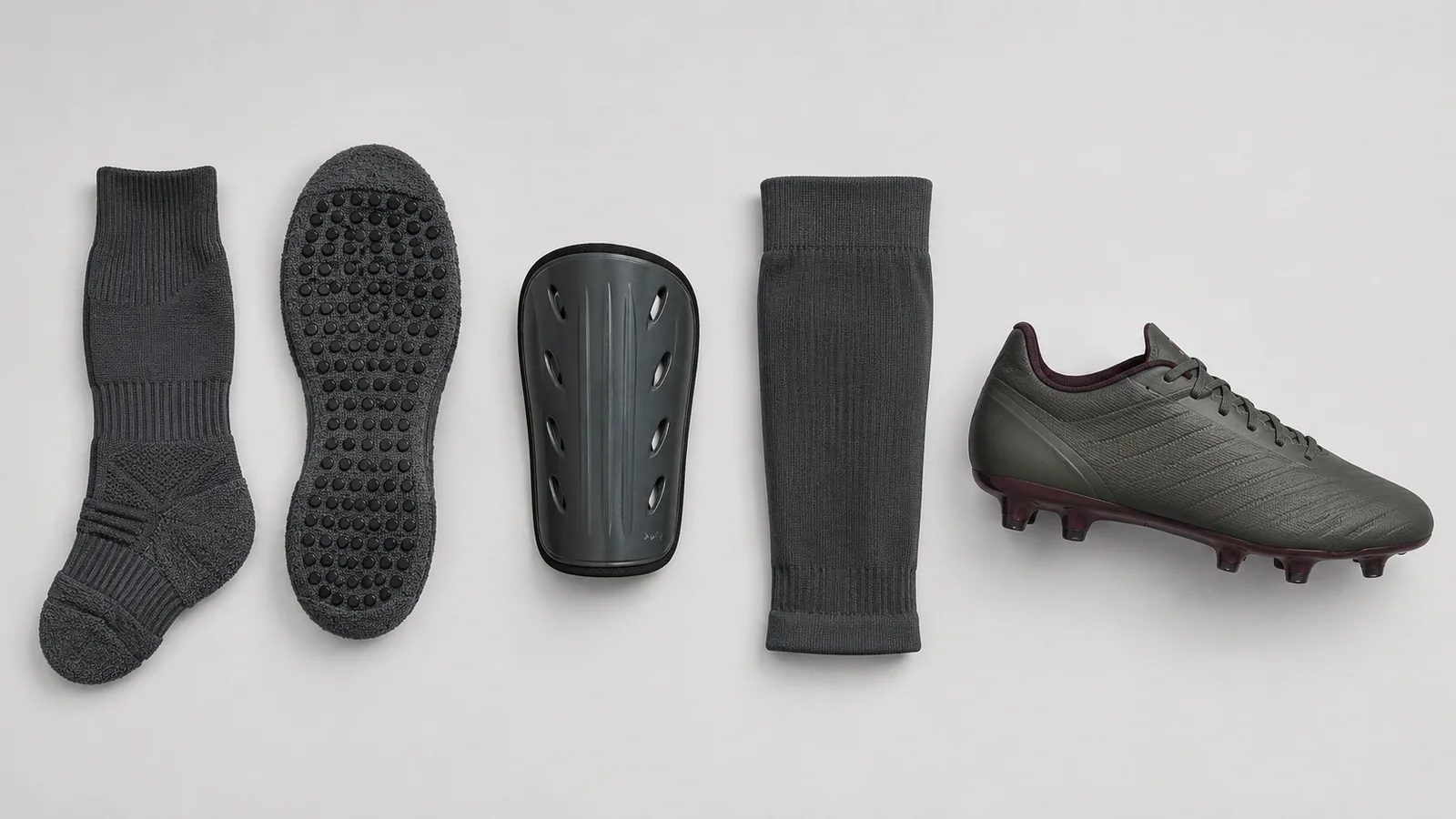
Footballers may cut away the foot section of a team sock, or use a purpose-made footless sleeve, when they want to wear a separate grip sock inside the boot. This is different from cutting small holes in the calf of a long sock, which is usually discussed as a pressure or fit preference.
The layered setup is not automatically suitable or permitted in every competition. Players and clubs should check current competition regulations, visible color requirements, shin-guard coverage and any rules on tape or external material before match use. For product planning, start with the custom football grip sock program.
Looking for the practical steps? Go to cutting position and edge preparation or why a cut sock can fray. Cutting alone does not finish the knit; check a spare sock and an appropriate edge treatment before changing a team set.
For the layer inside the boot, see how grip socks work with footwear. Shoe fit and lining contact are separate questions from cutting or choosing the outer team sleeve.
1Two Different Sock Cuts People Notice
Removing the Foot Section
A player may cut a team sock around the ankle and keep only the leg section. A short grip sock is worn on the foot, while the remaining team-colored section covers the lower leg and shin guard. A manufactured footless sleeve is the finished version of this idea.
Cutting Holes in the Calf
Small openings cut into the calf area serve a different purpose. They do not expose the grip sole or change contact inside the boot. Players who do this are usually responding to how a tight long sock feels around the calf. The two practices should not be treated as the same setup.
2Why a Grip Sock and Sleeve Are Layered
A grip sock places raised elements against the boot lining. In a correctly fitted boot, that interface may reduce relative movement between the sock and lining. Covering the entire grip sock with a conventional team sock changes that interface because the team sock becomes the layer touching the boot.
Removing the team sock's foot section leaves the grip sock in contact with the boot while retaining a visible team-colored leg section. It does not create traction between the boot and pitch, fix an oversized boot or guarantee better performance. The broader guide to where grip socks can and cannot help explains those limits.
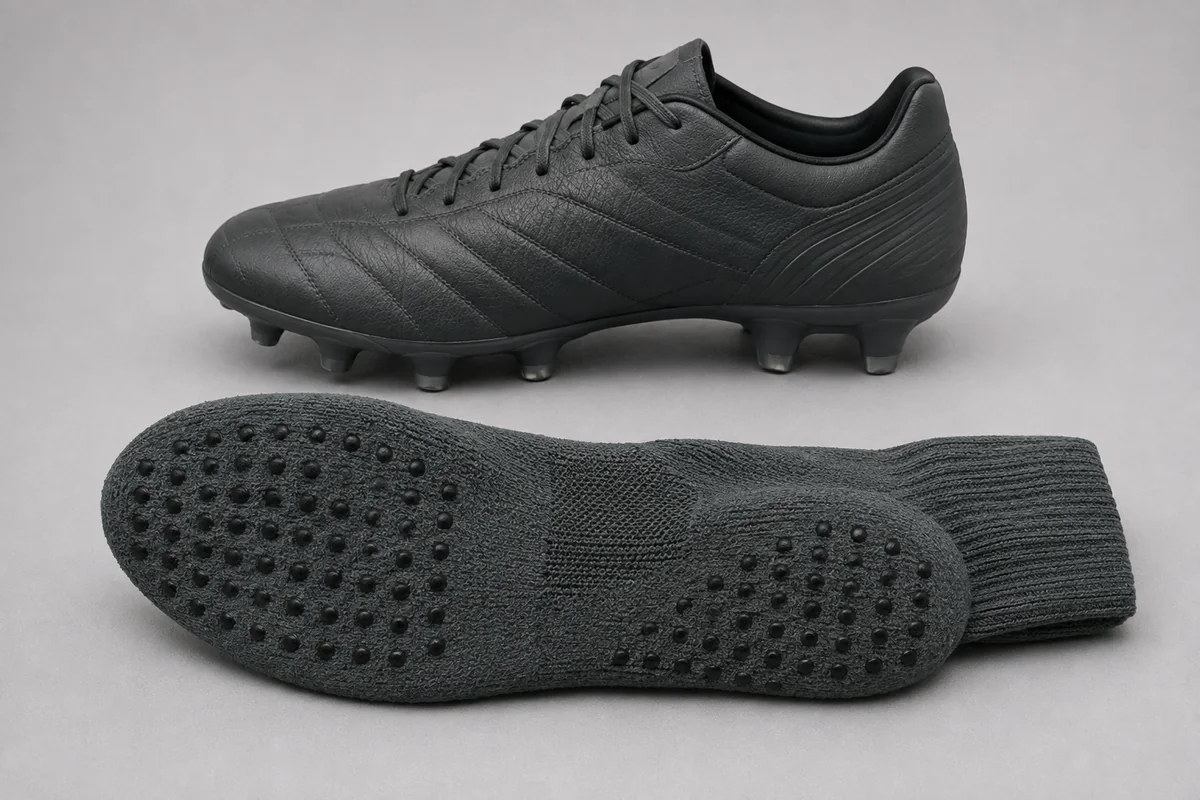
3How the Match-Day Layers Are Arranged
- Grip sock: worn directly on the foot inside the boot.
- Shin guard: positioned according to the player's equipment and competition requirements.
- Team sock leg or footless sleeve: worn over the lower leg and shin guard without covering the grip sock's sole.
- Tape or fastening: used only when permitted and matched to applicable color rules.
Players sometimes overlap the sleeve and grip sock around the ankle. The overlap should be checked for bunching, pressure and movement during training before it is used in a match.
How to Cut Team Socks for Grip Socks: Plan the Edge First
A hand-cut knitted edge can unravel. There is no universal cutting position or no-fray method for every team sock. A purpose-made footless sleeve avoids an unfinished cut edge; its fit, color and competition suitability still need checking.
For a trial using an existing team sock, use an unworn spare and confirm permission to alter the kit. The sequence below is general preparation guidance, not a tested factory cutting specification.
- Check the complete setup before marking. Establish where the grip sock, team-colored leg section and shin guard need to overlap. Record the intended sleeve length without assuming the same ankle position works for every size.
- Remove the sock and lay it flat. Mark the proposed line on the spare sock, away from the body. Never cut a sock while someone is wearing it. Keep the shin-guard coverage and an allowance for the intended edge finish in mind.
- Agree how the edge will be finished. Ask a competent alteration or knitwear specialist whether that fabric can take a suitable stretch-compatible finish. Do not assume household glue, heat or match tape will stop the knit from unravelling.
- Trial one spare before changing the team kit. If a suitable finish cannot be established, use a finished sleeve instead. After alteration, check the edge for loose loops, tightness and rolling before wear.
- Check wear and care together. Test the overlap during training and follow the care label. Recheck the edge after washing; stop using an altered sleeve that unravels, slips or creates pressure. One acceptable trial is not a durability guarantee.
Can You Cut Football Socks Without Fraying?
Cutting alone does not seal a knitted edge. The yarn, knit construction, cut position and edge treatment affect the result. A finished sleeve or a professionally finished trial is a more controlled starting point than treating tape as a permanent repair. Do not trim every pair until the trial has been reviewed.
For a club order: keep the sleeve and football grip sock as separate specifications. Record sleeve length, edge finish, size groups, overlap and colors in the sock specification brief, then use the sample approval record to log the actual observations. Coordinated sleeve development requires a separate feasibility review.
4Comparing Team Sock and Sleeve Options
| Setup | Practical benefit | Tradeoff to check |
|---|---|---|
| Full team sock only | Simple one-piece setup | No separate sole-grip interface |
| Grip sock only | Direct grip-sock contact with boot lining | May not meet match kit requirements |
| Grip sock + hand-cut team sock | Uses the existing visible team sock | Cut edge can fray and results may vary by player |
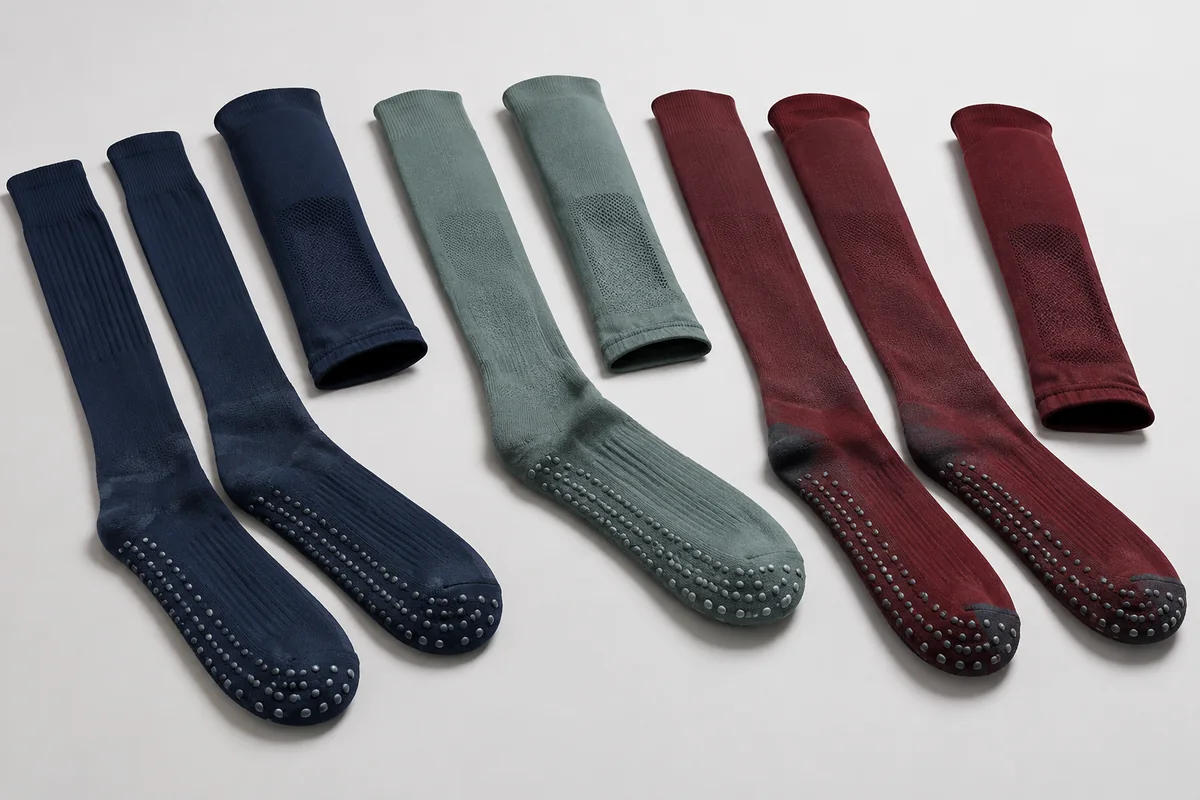
| Grip sock + finished sleeve | Repeatable length and finished edge | Color, overlap and competition acceptance must be confirmed |
| Full-length custom grip sock | Combines leg coverage and grip in one item | Must be sampled for boot fit, shin-guard hold and kit direction |
5What to Check Before Match Use
- Competition rules: confirm the current requirements with the relevant league, tournament or governing body.
- Visible color: check the required color for the sock section covering the shin guard and any external tape or fastening.
- Shin-guard coverage: make sure the final setup holds the guard as required without relying on an untested assumption.
- Boot fit: test the grip sock, overlap and boot together; added layers around the ankle can change pressure.
- Laundry: define and follow the care label for both the grip sock and sleeve. Use the guide to grip sock care and grip loss.
6Advice for Clubs, Academies and Brands
For a club or academy: ask players how the sock will be worn, confirm regulations, then test one coordinated setup before ordering for a squad. Record size, boot pairing, sleeve length, color and overlap position on the approved sample.
For a private-label brand: treat the grip sock and sleeve as two linked specifications. Define yarn color references, size ranges, cuff recovery, sleeve length, grip material and layout, logo position, packaging and care wording.
For project-specific sourcing context, compare the anonymous Canada youth football development record and United States football test-order record. These records show how separate briefs were handled; they do not establish competition approval or a result for another order.
Do not promise universal match approval or injury prevention. Product claims should describe the construction that was actually sampled and the checks that were actually performed.
7Frequently Asked Questions
Why do footballers cut the bottom off their socks?
Some players remove the foot section so they can wear a separate grip sock in the boot while retaining the visible leg section of the team sock. A footless sleeve provides a finished alternative to a hand-cut edge.
Why do some footballers cut holes in the calf of their socks?
Calf holes are a separate fit preference and do not expose the sole grip. They are commonly associated with reducing how restrictive a tight long sock feels around the calf.
Are cut socks and sock sleeves allowed?
Requirements vary by competition. Players and clubs should confirm current rules on sock color, shin-guard coverage, tape and external material before match use.
Do grip socks go under football socks?
In the layered setup, the grip sock is worn on the foot and the team-colored leg section or sleeve sits above it. A full conventional team sock should not cover the grip sole if direct contact with the boot lining is the intended design.
Do football grip socks prevent blisters?
No prevention guarantee should be made. A suitable grip layout may reduce one source of relative movement, but boot fit, moisture, skin condition, activity and individual factors also matter.
Should a club order hand-cut socks or finished sleeves?
A finished sleeve offers a repeatable edge and length, while a hand-cut sock uses existing kit. Compare regulations, color matching, durability, cost and player preference before choosing.
Planning a Football Grip Sock Program?
Send the intended setup, competition context, team colors, sizes, grip direction, quantity and delivery market. We will review the grip sock specification and discuss whether a coordinated sleeve concept needs feasibility sampling.
Request a Sample & Quote