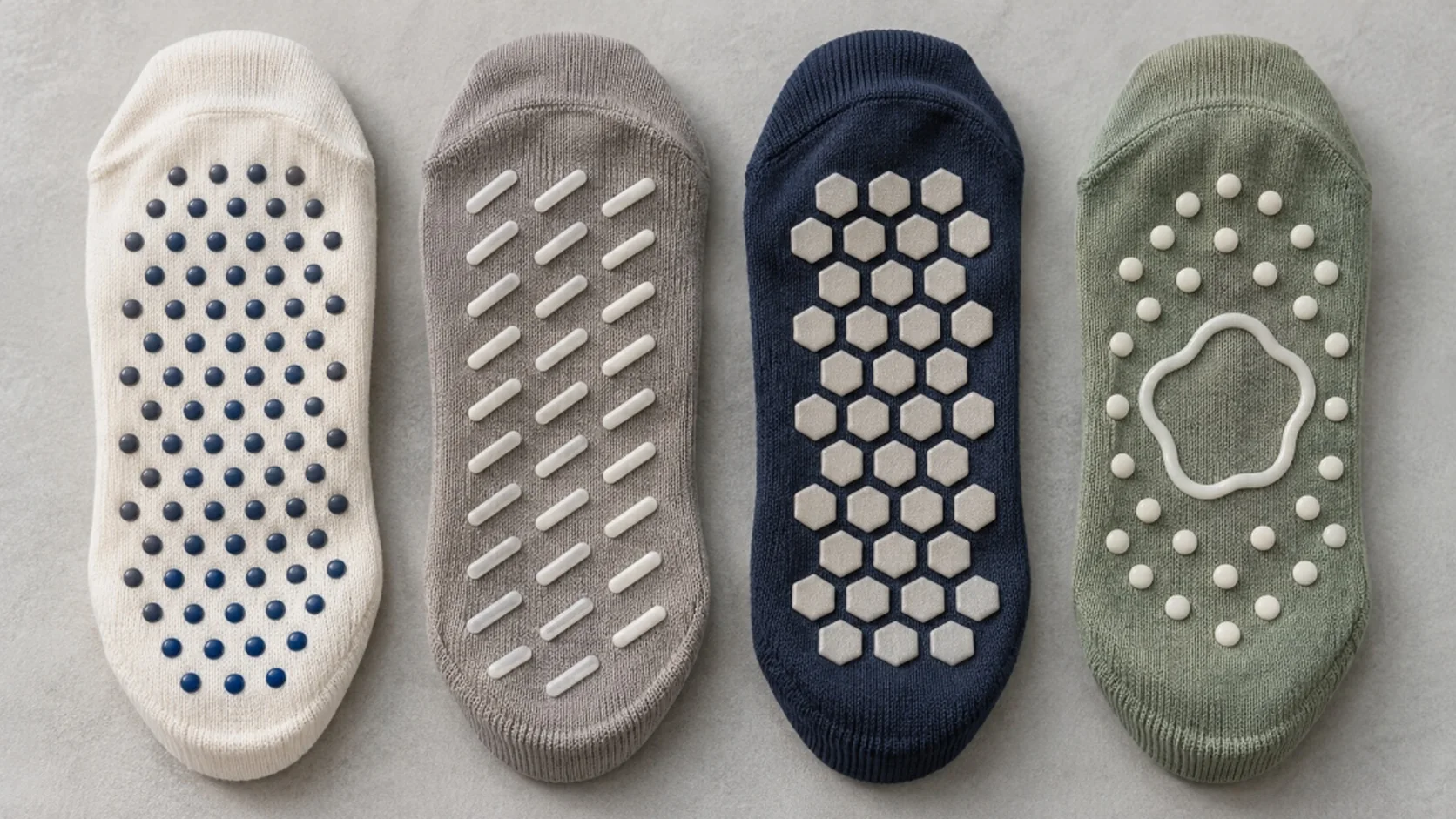
Develop a custom grip sole pattern from vector artwork (AI, PDF or SVG) mapped onto the actual sole outline of each planned size—not one scaled drawing. Confirm minimum dot/bar size, spacing and toe/heel margins with the factory before sampling, and approve placement on both the smallest and largest physical samples.
A custom grip sole pattern is the artwork that decides where grip material sits on the sole of a sock: which zones are covered and which are left clear, the shape and size of each element, how closely the elements are spaced, the grip color and any logo built into the layout. Develop it from a vector file drawn on the sole outline for each planned size, confirm the element size and spacing the application route can reproduce on your base sock, and approve the result on physical samples in the intended boot or venue setting.
The pattern is a product decision, not only a graphic. A layout that looks balanced on screen can sit differently on a worn sock, and a logo that reads well at full size can lose detail when it is made from raised grip. This guide covers how to brief, check and record a pattern. It does not give universal density figures or claim that any pattern performs better, because traction depends on the material, the base sock, fit, the contact surface and conditions.
The images in this guide are illustrations, not photographs of tested products or approved artwork. For the commercial development route, including MOQ, sampling time and logo options, see the custom grip socks program.
What a Grip Sole Pattern Defines
| Decision | What to specify | What to check on the sample |
|---|---|---|
| Coverage zones | Forefoot and heel zones, full sole, or project-specific contact zones, with any areas left clear | Where grip sits on the worn sock compared with the intended contact areas |
| Element type | Dots, bars, a geometric layout, a logo in grip, custom artwork or a stock pattern | Element shape and edges against the approved artwork |
| Size and spacing | Proposed element size and gaps, marked on the drawing as targets to confirm | Whether elements stay separate and consistent, and how the layout feels in use |
| Grip color | Matching or contrasting with the sock body, with a Pantone or factory color reference | Color against the reference under good light |
| Logo in grip | Which mark, its position and orientation, and whether it is read from the toe or heel end | Legibility, simplified details and position on each size |
| Placement by size | A sole outline and layout for each planned size, or a rule for how the layout changes between sizes | Placement on the smallest and largest sizes, not only the middle one |
The custom grip sock specification template includes these fields: grip material, color, pattern direction, coverage, and dimension and placement notes. Fill it in alongside the artwork so the drawing and the written brief describe the same pattern.
Common Pattern Types
- Dots. Separate round elements across selected zones or the full sole. Compare element size, spacing and how far the dots run toward the sole edges.
- Bars. Short straight or angled strips. Check orientation, because the direction of a bar is part of the design and should be marked on the drawing.
- Geometric layouts. Squares, hexagons or other repeated shapes. Check that the repeat stays even across the zone and around its edges.
- Logo in grip. A brand mark built from raised grip, often in the center of the sole or under the arch. The artwork must still work as grip, as the logo method guide explains.
- Mixed layouts. Combinations, such as dots in the loaded zones with a logo in a clearer area. Mark which element type belongs to each zone.
- Full-sole layouts. Grip across most of the sole. Coverage alone does not establish suitability; compare it on the intended surface.
Pattern direction and coverage interact with the surface and movement. The coverage and layout section of the floor-type guide explains why more area or a denser layout does not establish a proportional increase in traction.
Stock Pattern or Custom Artwork?
A buyer can start from an existing pattern or brief new artwork. The anonymized project records on this site show several routes:
- The United States football test order used a stock grip pattern for a 10-pair test before a confirmed 500-pair order.
- The Canada youth football project developed a custom grip model for XS/S/M youth sizing, with prototype approval before the first commercial order.
- The Dubai football brand project combined custom PVC grip artwork with several logo revisions.
- The UAE studio project used full-sole round PVC grip with a central logo in the layout.
These are project records, not standard schedules or outcomes. A stock pattern can be a practical route for a test order. Custom artwork suits a club, brand or venue identity, and may add artwork review and sample rounds. Ask which stock patterns are available for the proposed style, and how custom artwork affects sampling, cost and timing.
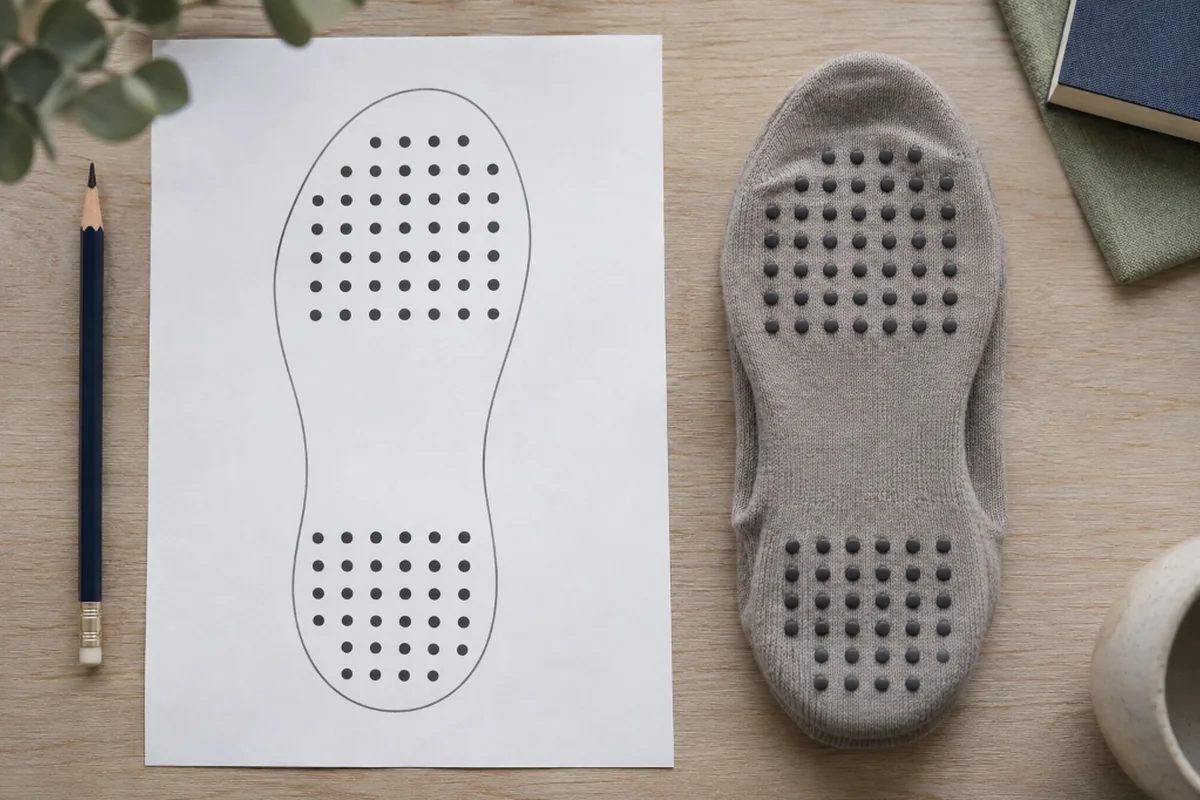
Preparing the Pattern Artwork
- Start from the sole outline. Ask the supplier for the sole outline of the proposed base sock in each planned size, or measure an approved reference sample. A generic foot shape is not enough.
- Draw in vector format. Supply AI, PDF or SVG artwork, with the pattern on its own layer and the outline on another.
- Mark orientation. Label the toe and heel ends, and the inner and outer side if the layout is not symmetrical.
- Mark zones and clear areas. Show which areas carry grip, which are left clear, and which element type belongs to each zone.
- State targets, not assumptions. Write proposed element size and spacing as targets to confirm, not as approved values.
- Give a color reference. Use a Pantone code or the factory color card for the grip and the sock body.
- Version the file. Give the artwork a version number and date, and keep the same number on the sample record.
- Use artwork you may reproduce. Supply only logos and marks you own or have permission to use.
If you have no vector file yet, a reference photo or marked-up image can start the discussion. Keep it clearly labeled as a reference until the artwork is drawn and approved.
Density, Element Size and Application Limits
Density describes how much of a zone is covered and how closely the elements sit. It is a design variable, not a quality grade. A denser layout changes contact, feel and sole flexibility. It does not establish more traction on its own, and a layout that suits one surface may feel different on another.
Every application route also has practical limits. Very small elements, thin lines and narrow gaps may merge, lose definition or disappear when grip is applied to a knitted sole. The edge of the sole and the area near the toe seam may need a margin. These limits depend on the base sock, the grip material and the application method, so ask the supplier to confirm them before you finalize the artwork:
- the smallest element and the narrowest line that can be reproduced cleanly;
- the smallest gap between elements;
- the margin needed from the sole edge, the heel and the toe;
- whether the proposed layout can be reproduced on every planned size.
PVC grip is deposited on the sole in the chosen pattern and then cured; in our production route this is completed by an external specialist and the finished socks are reviewed against the approved artwork. The PVC grip adhesion guide explains the variables involved, and the PVC grip technology page covers when PVC is a practical starting point.
Placing the Pattern on Every Size
A sock stretches when it is worn, and the sole pattern stretches with it. A layout drawn for one size may sit too far forward or back on another, and a pattern stretched on a larger foot may move away from the zones it was meant to cover. The sizing guide explains why the grip pattern is positioned to sit under the ball of the foot and heel only when the sock fits as intended.
Do not assume that one drawing scales correctly across the range. Ask how the layout is positioned for each proposed size, then review the smallest and largest sizes on representative feet. Youth and adult football ranges, or child, youth and adult venue groups, are typical cases where a scaled drawing needs checking on each size.
Pattern Questions by Program
| Program | Pattern questions to answer | Where to review it |
|---|---|---|
| Football grip socks | Forefoot and heel coverage, areas left clear, youth and adult sole sizes, grip color against team colors | Inside the intended boot, with the team-sock sleeve if one is worn |
| Trampoline and venue socks | Coverage on the sole and outer edge, park logo in grip, layouts for child, youth and adult groups | On the venue's intended surface, under the venue's own approval process |
| Private label grip socks | Whether the pattern is a brand signature, logo legibility, grip color in the brand palette | On the worn sample and in the retail packaging, if the sole is visible |
For program details, see the football grip socks program, the trampoline park grip socks program and private label grip sock development. The football grip sock OEM specification guide and the trampoline park planning guide cover the rest of each brief.
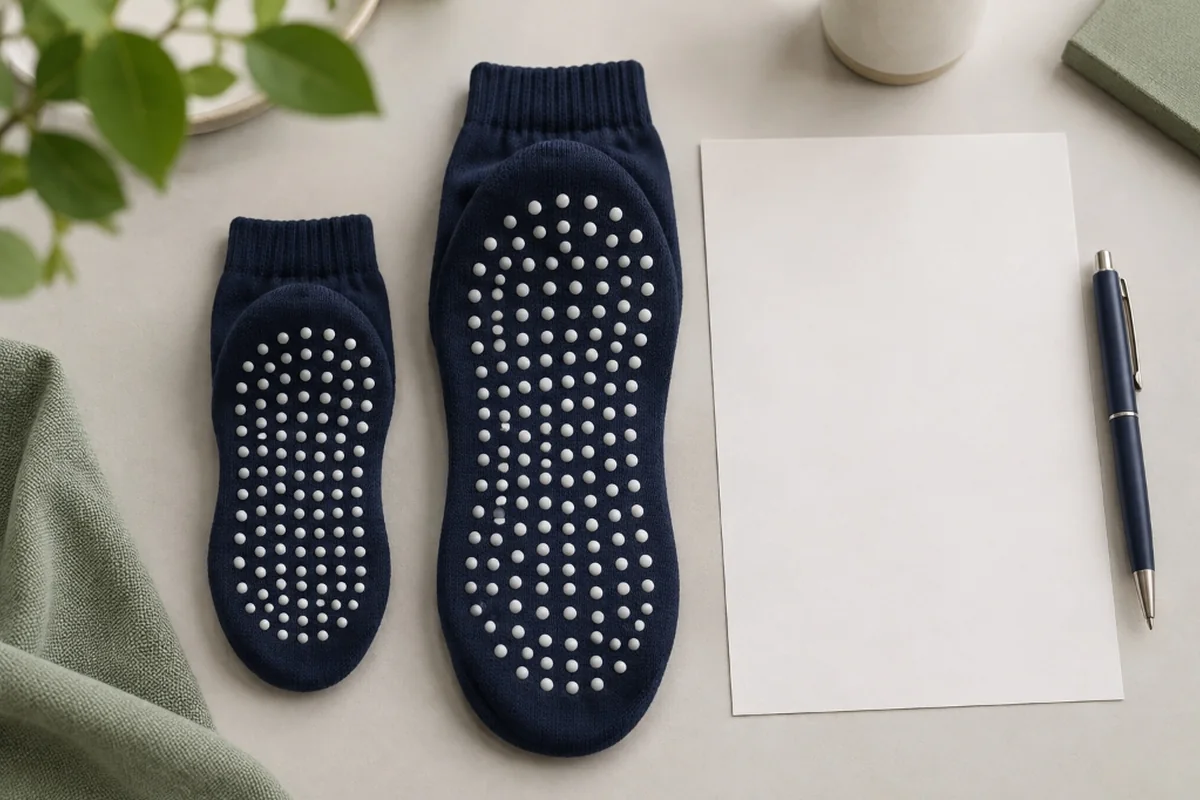
Approving the Pattern on Samples
- Match the artwork version. Confirm that the sample was made from the latest artwork version and record that number.
- Compare flat against the drawing. Check coverage, element shape, spacing, color and logo against the approved artwork.
- Look at the edges. Check element edges and deposit consistency by eye and by hand for visible gaps, thin edges or uneven areas.
- Check placement when worn. On representative feet, confirm where the zones sit, including on the smallest and largest sizes.
- Review it in use. Use the intended boot or venue surface and normal movement. Record feel, any catching and any sock rotation.
- Agree any extra checks. Edge, flex and wash checks are not automatic standard tests. If the project needs them, agree the method, sample quantity and acceptance criteria first.
- Approve a specific version. Record the approved artwork version, sample ID and sizes, or the revisions needed.
Keep the requirement, method, observations and decision for each sample in the sample approval record. The grip sock QC guide covers the wider inspection route from sample to bulk.
Example clause with fields to complete. Replace the bracketed items with the details confirmed for your project.
"Sole pattern: artwork [file name, version, date] on sole outlines for sizes [list sizes]. Grip material [as confirmed by the supplier]; grip color [reference]. Zones: [forefoot and heel / full sole / project-specific], clear areas [description]. Element size and spacing: [targets], to be confirmed against the application limits for this base sock. Approval: worn review in [boot or venue surface] on sizes [smallest and largest]; compare against approved reference sample [sample ID]."
Keeping the Pattern Consistent on Reorders
Once a pattern is approved, treat the artwork file as part of the product specification. Keep the approved version number, the sole outlines for each size, the grip color reference and the approved sample together. A reorder should be checked against that record rather than recreated from a photo. If the pattern changes, give it a new version number and approve it again on a sample before bulk. The private label development and reorder guide explains how to keep the whole product record together.
Frequently Asked Questions
What file should I send for a custom grip sole pattern?
Send vector artwork in AI, PDF or SVG format, drawn on the sole outline for each planned size if you have it. Mark the toe and heel ends, the grip zones and clear areas, the grip color reference and an artwork version number. A photo or marked-up reference image can start the discussion if no vector file exists yet.
How dense should a grip sole pattern be?
There is no universal density. Coverage, element size and spacing are design variables to compare on samples for the intended boot, floor or venue surface. More coverage does not establish more traction. Confirm the practical element size and spacing limits with the supplier for the base sock and application route.
Can my logo be made into the grip pattern?
Yes, a logo can be built into the raised sole grip, but it still has to work as a grip pattern. Thin lines and small gaps may merge or disappear, so artwork often needs simplifying. Approve the logo's legibility, position and spacing on a physical sample for each size.
Does one grip pattern drawing work for every size?
Not automatically. A pattern scaled from one size may place grip differently on a smaller or larger sole, and the sock stretches when worn. Ask how the layout is positioned for each proposed size and review the smallest and largest sizes on representative feet.
Should I choose a stock pattern or custom artwork?
A stock pattern can be a practical start for a test order, while custom artwork suits a brand or venue identity. Both need sample approval for the chosen base sock and sizes. Ask which stock patterns are available for the proposed style and what custom artwork adds to sampling, cost and timing.
Does a grip pattern guarantee that socks will not slip?
No such guarantee should be made. Traction depends on the grip material, pattern, base sock fit, contact surface and conditions. A sole pattern is approved by reviewing the finished sample in its intended setup, not by its appearance on a drawing.
Developing a Custom Grip Sole Pattern?
Send your artwork or reference, the sock type, planned sizes, grip color, intended boot or venue surface and estimated quantity. We will review the pattern against the base sock and application route before sampling.
Still Drawing the Pattern?
Record the zones, element type, grip color and sizes in the specification before requesting a sample.
Prepare Your SpecificationReady to Sample?
Bring your vector artwork or reference image, quantity and destination market.
Request a Sample & Quote