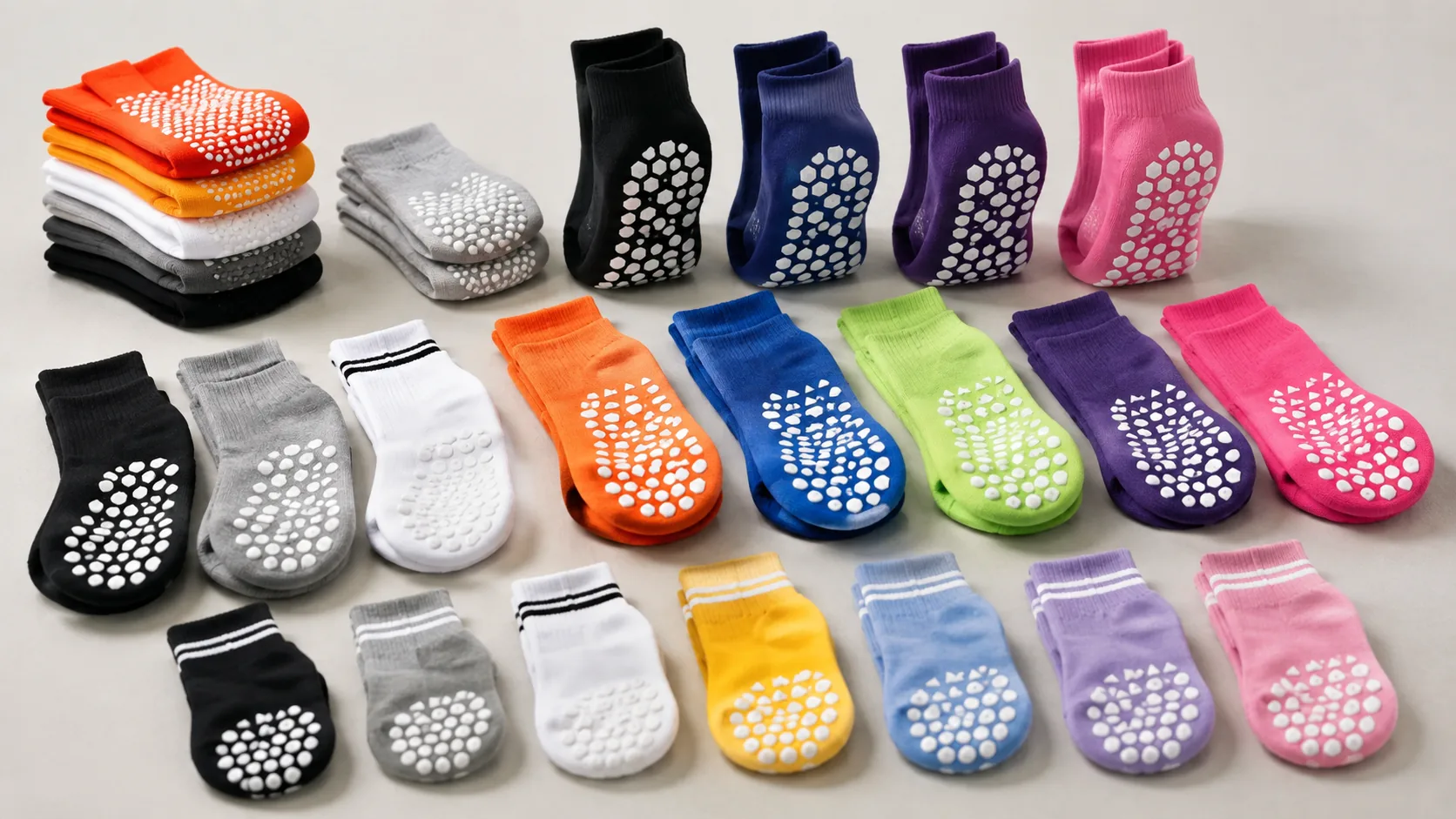
Successful trampoline park grip sock wholesale programs standardize one sock silhouette paired with one distinct color per size (Toddler XS through Adult XL), durable sole coverage, front-desk OPP polybag packing and a clear reorder trigger. Standard custom venue grip socks start at 50 pairs per style, color and size, with 10–15 workdays for samples and 12–16 workdays for bulk production after spec confirmation.
Before ordering trampoline park grip socks in bulk, define the venue and equipment requirements, intended surface, grip layout, measured size range, branding, packaging, care process and quantity per size. Approve a physical sample against those requirements instead of treating a generic grip sock as suitable for every venue.
Venue socks sit inside an operating system: guest admission rules, equipment guidance, staff handling, size selection, sale or reuse, and local requirements all matter. This guide helps operators prepare a manufacturing brief. It does not replace the equipment maker's instructions, the venue's risk assessment or applicable regulations.
For wholesale planning, the short answer is: group guests into measured child, youth and adult sizes, give each group a visible cue staff can read quickly, choose packaging for how socks reach guests (issued with admission, sold at the front desk or reused under venue control), split the order into pairs per size and color, and keep opening stock separate from a replenishment plan based on your own usage records. The trampoline park grip socks program covers the product options and MOQ.
1Start with the Venue and Equipment Requirements
State where the sock will be worn, which surfaces and equipment it may contact, the age and foot-size range, whether guests keep the pair, and how staff will identify sizes. Give the factory any requirements supplied by the equipment maker, insurer or local authority that affect the product.
A grip sock can add friction between the sole and a contact surface, but it is not a substitute for equipment maintenance, supervision, correct fit or venue rules. Review the custom trampoline park grip sock program for the focused venue product route, or use the broader custom grip sock development program to compare other applications.
2Define Grip Layout and Material Together
Ask for a sole drawing that shows the pattern across the forefoot, arch, heel and outer edge. Wider coverage may be worth evaluating where guests contact the surface away from the center of the foot, but coverage alone does not establish suitability. Dot shape, spacing, deposit profile, sock fit and the actual surface must be assessed together. If the park logo or name will be part of the sole, the custom grip sole pattern guide explains how to prepare the artwork and check it on each size group.
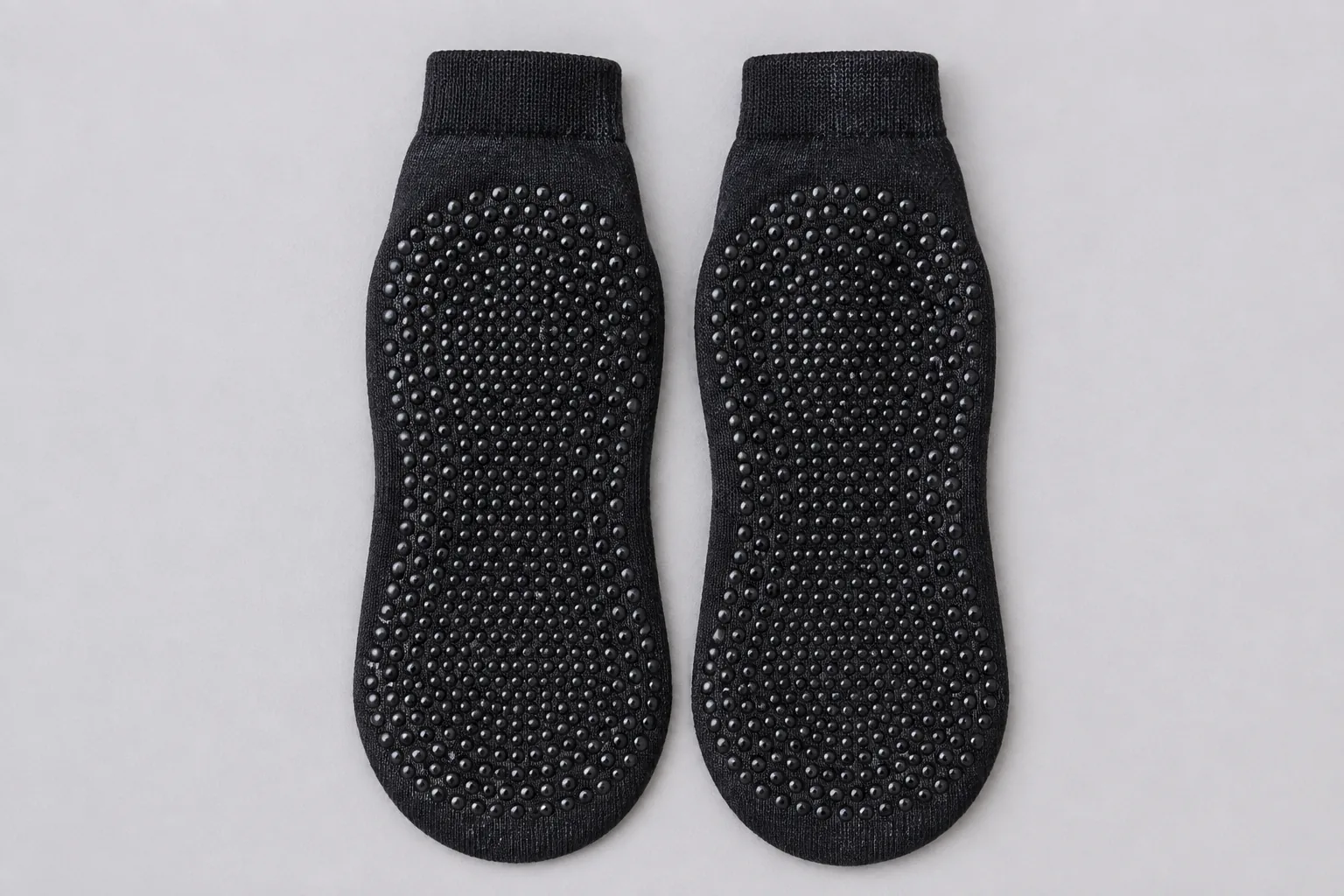
PVC is frequently considered for practical sports and venue programs. Silicone may be considered where a different molded feel or product position is needed. No material should be selected from a label alone. Compare candidate samples and review the application-specific guidance in Why PVC Works.
3Agree Adhesion and Care Checks Before Bulk
Grip application details are not fully visible in a quotation. If the socks will be reused, tell the supplier the planned care process and agree which sample checks are required. Grip edge inspection, flex evaluation and a project-specific wash check can be added when both sides record the method and acceptance point.
GripSockFactory's confirmed base sample inspection covers design, dimensions, stitching and overall sock quality. Edge, flex, wash, AQL or other performance checks are not automatic and must be agreed for the project. Read the grip adhesion guide and the grip sock wash-care guide before defining that scope.
Care instructions should follow the approved material, supplier guidance and venue process. Avoid publishing one universal wash rule for every grip formulation.
4Use Measured Sizes and a Realistic Size Mix
A single nominal size can stretch differently on a large foot and bunch on a small one, changing both comfort and grip placement. Compare measured foot length, sock dimensions and stretch behavior across the actual guest range rather than relying only on broad shoe-size labels. The grip sock sizing guide provides the one-size versus multiple-size decision framework.
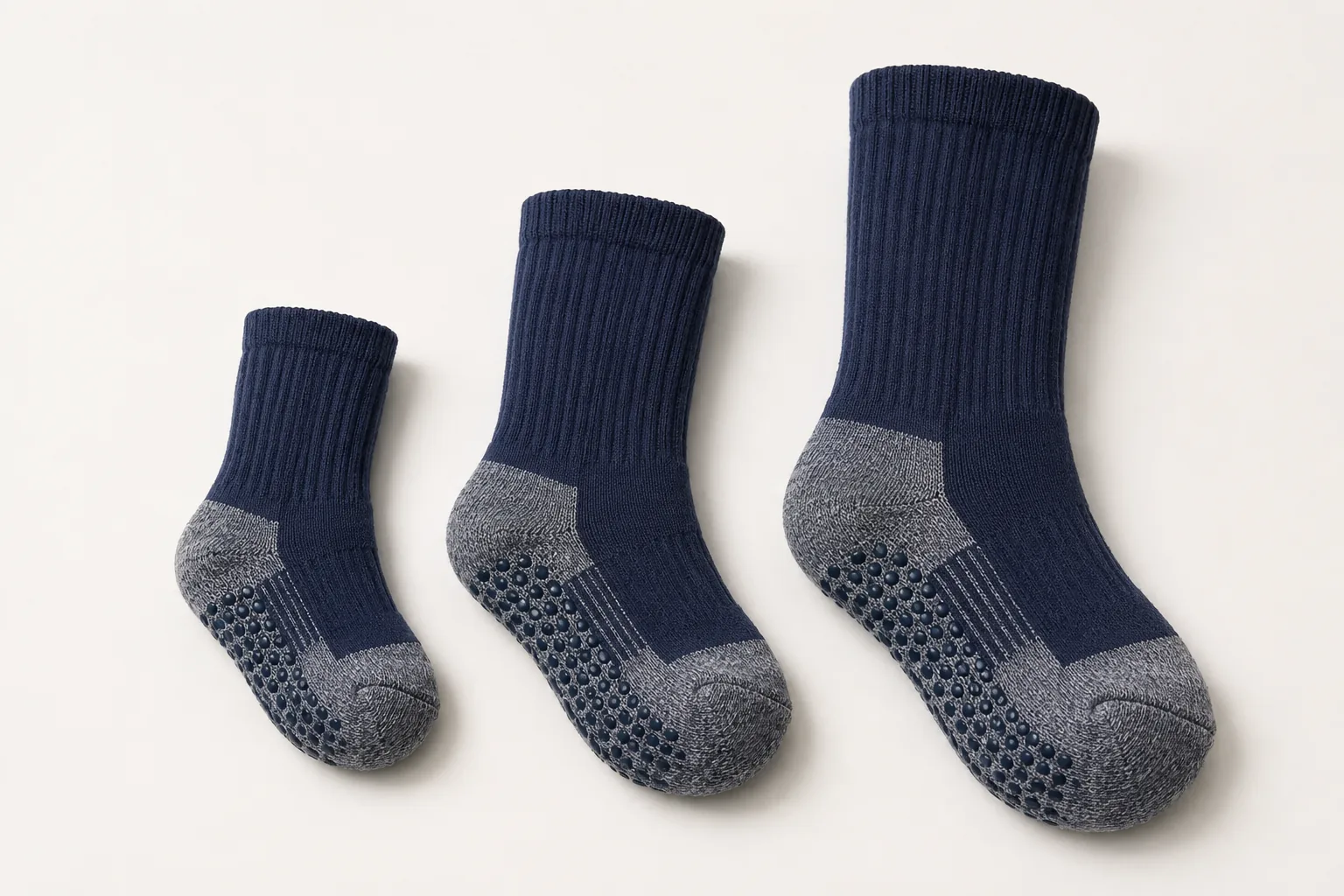
A practical approach is a small number of clearly separated size groups with a visible cue that supports staff selection. The right number of sizes depends on the venue's guest data. Plan the order by quantity per size, not as one total.
Child, youth and adult groups
Define each group by measured foot length rather than age alone, because guests of the same age can need different sizes. Use your admission or sales records, if you have them, to estimate the share of guests in each group. If the venue is new, state that the split is an estimate and plan to adjust it on the first reorder.
Visible size cues
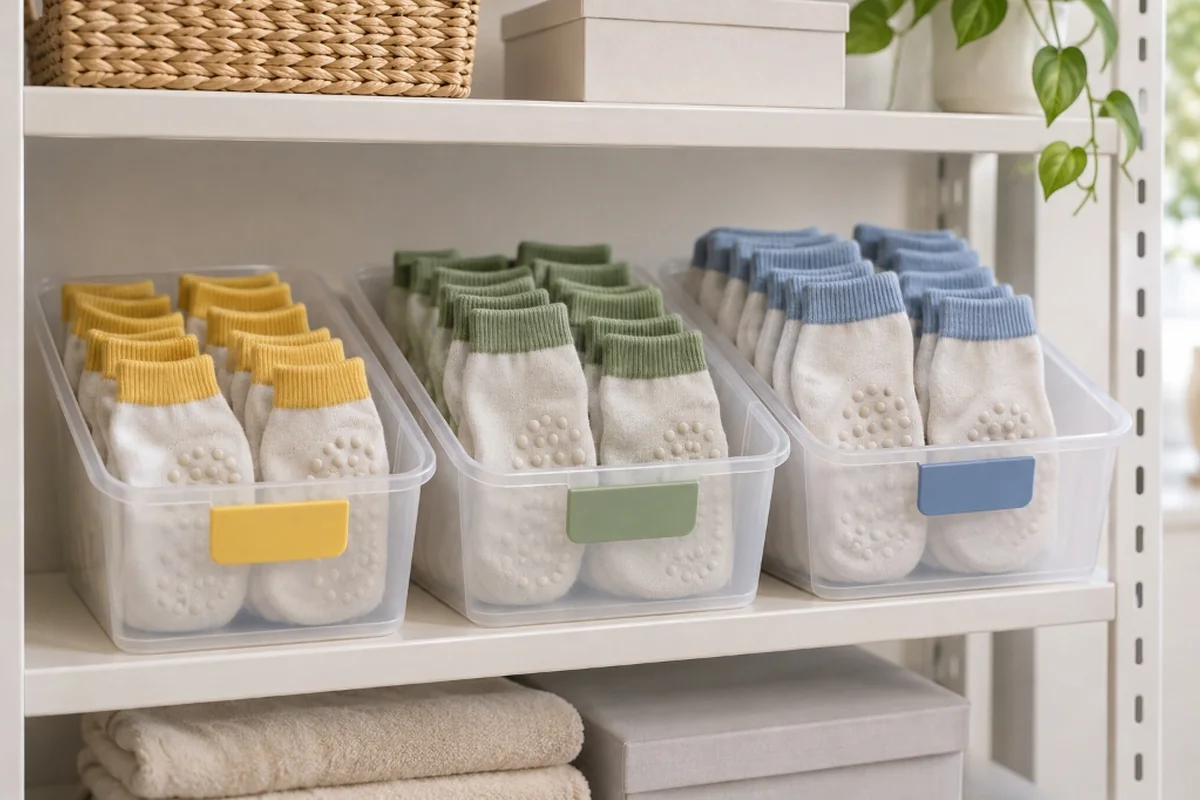
Choose one cue per size group and keep it the same on every reorder: a cuff color, a knitted park name or number, a grip color, or a packaging label. Check on the sample that staff can read the cue quickly at the counter and that the cue still reads once the sock is folded or packed.
| Size group | Measured foot length | Visible cue | Opening stock (pairs) |
|---|---|---|---|
| Child | [range] | [cuff or label color] | [pairs per color] |
| Youth | [range] | [cuff or label color] | [pairs per color] |
| Adult | [range] | [cuff or label color] | [pairs per color] |
Record each measured size and color combination in the size, color and quantity breakdown. Keep initial-order quantities separate from reorder estimates and reconcile the allocated pairs with the order total before comparing supplier quotes. The published starting quantity for standard custom grip socks is 50 pairs per style, color and size, so check each size and color cell, not only the total.
5Choose Branding and Packaging for Front-Desk Use
Jacquard, embroidery, surface print and in-grip artwork each have different artwork and placement limits. Jacquard avoids a surface print layer and works well for many bold marks; print can reproduce details that are difficult to knit; grip artwork can integrate the identity into the sole pattern. Sample the final method rather than declaring one universally most durable.
Packaging should match the operating model. Bulk cartons can reduce per-pair unpacking for controlled back-of-house stock, while individual bags or sleeves may support direct sale and presentation. Consider how staff see the size, how pairs are stored and how quickly a guest can receive them. The private label packaging and reorder guide provides a practical checklist.
| Scenario | Packaging question | What to confirm |
|---|---|---|
| Issued with admission | Bulk packing by size, or individual packs for quick hand-out | Pairs per inner pack and carton, size marking on each pack |
| Front-desk sale | Header card, belly band or a buyer-supplied special format | Size visible from the front, barcode or price field, display space |
| Reuse under venue control | Bulk cartons for back-of-house stock | Size identification that survives laundering, such as a cuff color |
6Decide Whether Guests Keep or Reuse the Socks
Selling and reusing create different specifications. A sell-to-guest model puts more emphasis on presentation, take-home branding and per-pair handling. A reuse model adds collection, sorting, hygiene, care-process control and a documented inspection or retirement rule.
Neither model is automatically better. Compare labor, storage, local hygiene requirements, guest expectations and the approved care method. Ask the factory to quote the exact packaging and size split for the selected model. Studios facing the same sell-or-lend choice can use the Pilates studio grip sock policy guide.
| Decision | Sell to guest | Reuse under venue control |
|---|---|---|
| Packaging | Individual presentation may support the sale | Bulk handling may be practical if permitted |
| Care | Provide approved consumer care instructions | Document the venue cleaning and inspection process |
| Branding | Take-home visibility can be important | Sorting and size identification can be important |
| Planning | Forecast sales and replenishment by size | Track circulation, condition and replacement by size |
7Plan Opening Stock and Replenishment
A venue sock program runs continuously, so the first order is only the opening stock. Plan replenishment before the first shipment arrives:
- Separate opening stock from replenishment. Size the first order to open the venue or launch the program, and estimate replenishment separately.
- Track usage by size and color. Record pairs issued, sold or retired per size group each week or month. These records, not the first estimate, should set later quantities.
- Set a reorder point per size. Reorder when stock for any size reaches a level that covers expected use during production and shipping. The published bulk window for standard custom grip socks is 12-16 workdays, or 15-19 with grip plus embroidery; shipping time is additional, and both are confirmed per order.
- Watch the smallest cells. Each size and color counts separately against the published minimum, so a size that sells slowly may need a longer reorder cycle.
- Allocate cartons by location. For several venues, state pairs per location, size and color, and the carton labeling needed for each.
Keep each reorder tied to the approved sample, artwork version, colors and packaging record, so a repeat order is checked against the same standard rather than recreated from photos. The MOQ and lead-time guide explains how to build the order calendar.
8Approve the Sample and Lock the Reorder Record
- Fit: measure every planned size and review grip placement on representative feet.
- Surface: follow the venue's own process for evaluating the sample on intended equipment and flooring.
- Grip: check layout, color, deposit consistency and any separately agreed evaluation.
- Branding: approve artwork size, color, placement and method.
- Packaging: confirm folding, size identification, labels and carton quantities.
- Reorder: retain the approved sample, dimensions, colors, artwork and inspection scope.
For quote planning, include quantity per size and color and confirm the applicable MOQ and timeline. The wholesale price-factor guide explains why these details change the comparison.
Use the trampoline sock quotation checklist to align construction, branding, packaging and shipping scope. At sample review, keep requirements, methods, actual results and the approval decision in the downloadable QC approval record. This blank template does not certify safety or replace the venue's own approval process.
Bottom line: the right venue sock is the design your operation can fit, identify, handle and verify consistently.
?Trampoline Park Grip Sock FAQ
What should an operator define before ordering?
Define venue and equipment requirements, intended surface, grip layout, measured sizes, branding, packaging, care process, quantity per size and any required checks.
Should a venue use one size or multiple sizes?
Compare multiple measured sizes against the real guest range. A single size can shift grip placement or bunch on feet outside its intended fit range.
Is PVC or silicone best for trampoline park socks?
No material is automatically best for every venue. Compare candidate samples on the intended surface and against the venue's requirements and care process.
Does a full-footbed grip pattern guarantee better performance?
No. It can provide broader coverage to evaluate, but material, geometry, fit, surface and application quality also matter. Validate the complete sample.
How should an operator check a sample?
Check measured fit, grip placement, branding, packaging and any agreed project-specific edge, flex or care evaluation before approving bulk production.
What information is needed for a quote?
Send the use case, venue and surface details, size and color split, grip concept, logo artwork, packaging, order quantity and required project checks.
How should a venue color-code grip sock sizes?
Choose one visible cue per size group, such as a cuff color, a knitted number or a packaging label, and keep it the same on every reorder. Confirm on the sample that staff can read the cue quickly at the front desk.
How should a venue plan grip sock replenishment?
Keep opening stock separate from replenishment, track usage or sales by size and color, and set a reorder point per size that allows for the confirmed bulk production window plus shipping. Check each reorder against the approved sample and specification.
Planning a Trampoline Park or Indoor Venue Sock?
Send your venue use case, guest size range, colors, grip reference, logo, packaging and quantity split. We will review the specification needed for a sample discussion.
Request a Sample & Quote